
Ethiopia: Injera, Bread as Plate, Tool, and Tradition
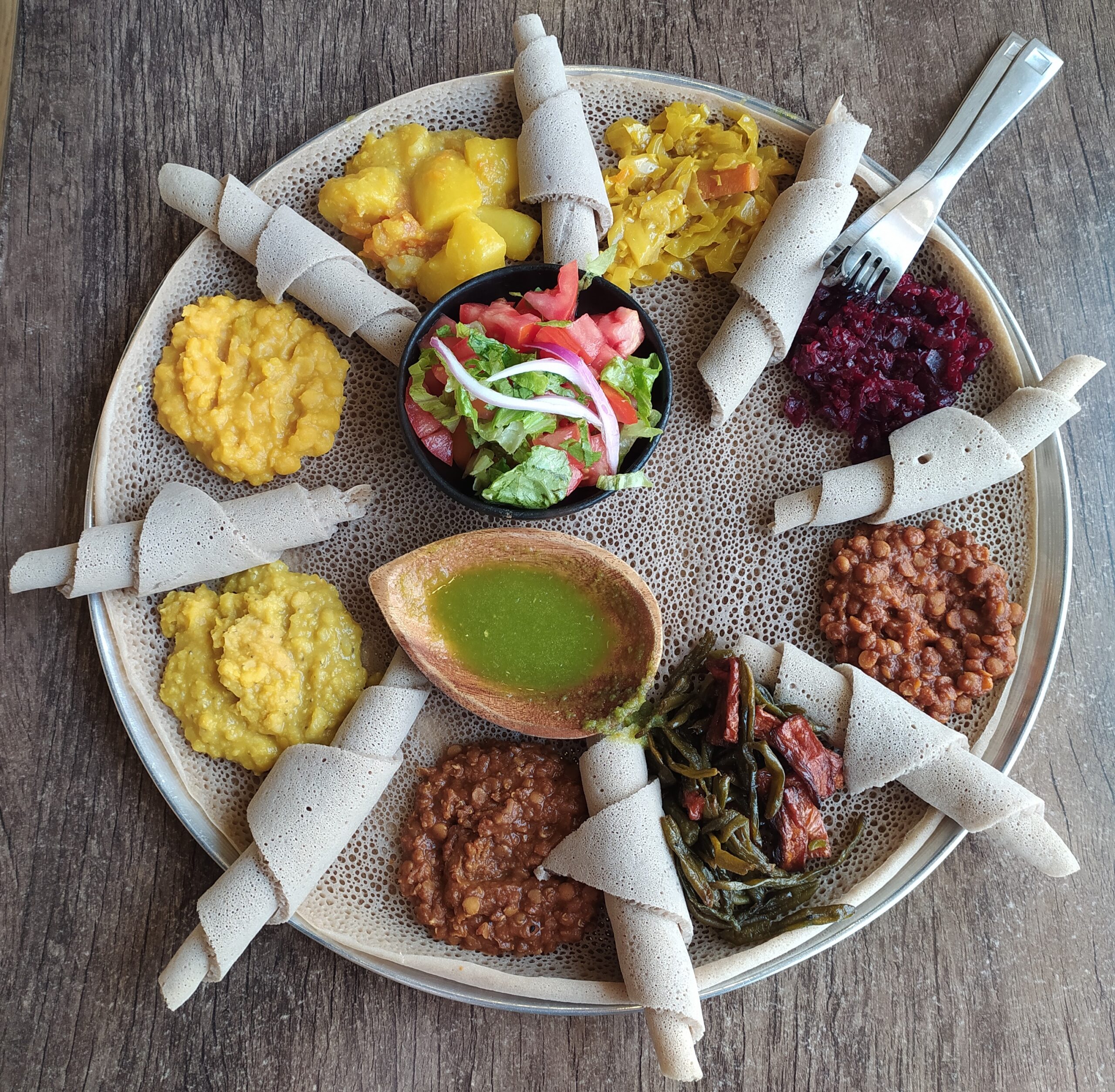
Injera occupies a singular position in Ethiopian food culture, functioning not only as a staple food but also as a dining surface, eating utensil, and social connector. Its presence defines how meals are prepared, shared, and experienced across Ethiopian society.
Unlike bread traditions elsewhere, injera structures the entire act of eating. Stews, vegetables, and legumes are served directly atop its surface, transforming food consumption into a collective and participatory ritual. This article explores how injera developed, why it became indispensable, and how it continues to anchor Ethiopian identity across generations.
Origins and Agricultural Foundations
Injera is traditionally made from teff, one of the oldest cultivated grains in the world and indigenous to the Ethiopian highlands. Teff’s resilience to drought, pests, and variable rainfall made it ideally suited to Ethiopia’s diverse landscapes.
For centuries, small-scale farmers cultivated teff as a dependable crop capable of sustaining communities through environmental uncertainty. Its short growing cycle and adaptability allowed it to thrive where other grains struggled, reinforcing its role as a cornerstone of survival.
Over time, the relationship between teff and injera became inseparable, embedding agricultural knowledge directly into culinary tradition.

Fermentation as Inherited Knowledge
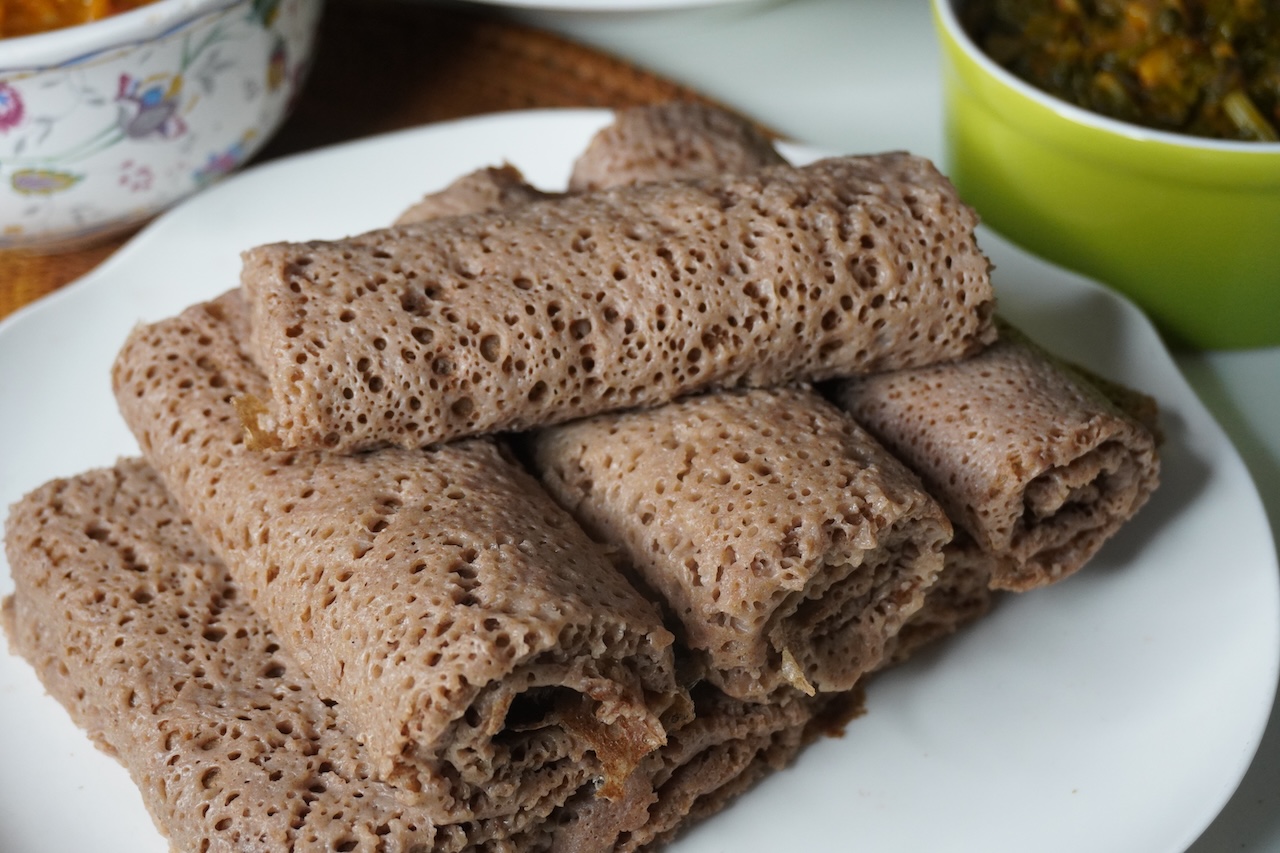
Injera preparation relies on natural fermentation, a process that transforms teff flour and water into a tangy, spongy flatbread. The batter is left to ferment for several days, developing flavor and structure through wild microorganisms.
This fermentation process improves digestibility, increases mineral absorption, and enhances shelf stability. Long before microbiology was understood scientifically, Ethiopian cooks mastered fermentation through observation, repetition, and communal knowledge-sharing.
Fermentation methods are rarely written down. Instead, they are learned through practice, passed from one generation to the next, reinforcing continuity and cultural memory.
Injera as a Social and Spatial Framework
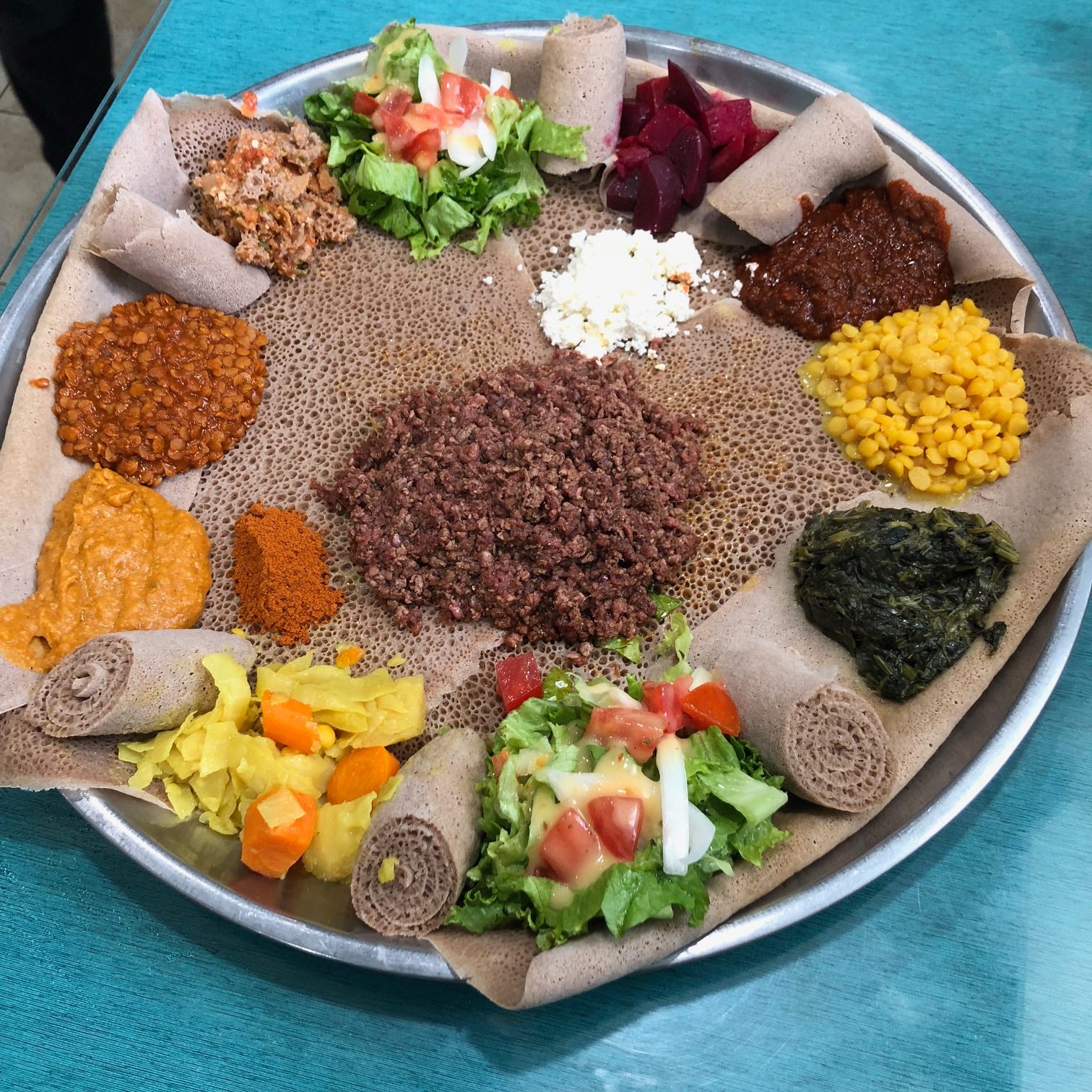
Ethiopian meals are traditionally served on a large communal platter layered with injera. Various stews, vegetables, and lentil dishes are arranged directly on top, eliminating physical divisions between diners.
Diners tear pieces of injera by hand, using them to scoop food. This shared format encourages cooperation, patience, and attentiveness, reinforcing social bonds during meals.
Eating from the same surface symbolizes equality and trust. The act of sharing injera transforms eating into a collective experience rather than an individual one.
Ritual, Religion, and Daily Rhythms
Injera plays a central role in Ethiopia’s religious traditions, particularly within Orthodox Christian fasting cycles. During fasting periods, animal products are avoided, and injera is paired with plant-based stews that align with religious guidelines.
Preparation methods, ingredient choices, and serving customs vary according to religious calendars and ceremonial contexts. Injera adapts to both sacred and everyday settings without losing its cultural meaning.
Despite urbanization and modernization, injera remains central to daily meals, anchoring modern life to ancestral rhythms.
Injera in Migration and the Global Diaspora
As Ethiopian communities migrated across the world, injera traveled with them. Preparing injera abroad often requires sourcing teff or adapting techniques to new environments, reinforcing its role as a marker of cultural continuity.
For diaspora communities, injera connects generations to homeland traditions, serving as a tangible link to memory, identity, and belonging.
Conclusion
Injera represents more than nourishment; it is a cultural system that integrates agriculture, fermentation, social structure, and ritual practice. Its endurance demonstrates how food can organize daily life while preserving historical knowledge.
Through injera, Ethiopian culture expresses values of sharing, resilience, and continuity. Its sustained relevance illustrates how traditional foods function as living archives of human experience.
Leave a Reply